


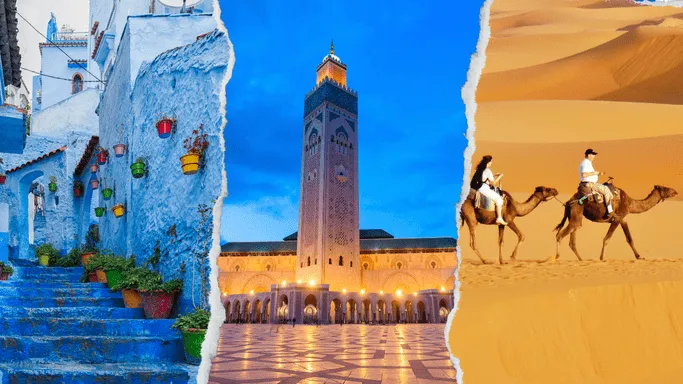
Every year, millions of visitors pass through Morocco and see the same postcard version of the country — the snake charmers of Djemaa el-Fna, the tanneries of Fes, the dunes of Merzouga. These places are extraordinary and absolutely worth experiencing. But the real Morocco — the one that locals know and love — exists in the spaces between the famous stops. It lives in a roadside café where truck drivers eat bessara at dawn, in a weekly souk in a village that appears on no tourist map, in the silence of a mountain valley where a shepherd waves from a distant hillside.
This travel Morocco guide is written for people who want more than a highlight reel. It is for travelers who want to eat where locals eat, sleep where the landscape is most beautiful, drive roads that most tourists never find, and return home with stories that cannot be bought at any souvenir stall. And for those who want the ultimate freedom to do all of this — traveling by camping car in Morocco is the key that unlocks it all.
Think Like a Local Before You Arrive
The first step in any genuine travel Morocco guide is mindset. Moroccan culture operates at a different rhythm than most Western countries, and the sooner you embrace it, the richer your experience will be.
Time in Morocco is flexible. A meeting scheduled for three o'clock might begin at four. A shop marked as open might be closed for prayer. A road shown as paved on your map might turn out to be a dirt track. None of this is a problem — it is simply the texture of daily life here, and once you stop fighting it, Morocco becomes infinitely more enjoyable.
Relationships matter more than transactions. Before asking a shopkeeper for directions, greet him properly. Before photographing someone, make eye contact and smile. Before entering a negotiation in the souk, accept the glass of tea you are offered. These small gestures of respect cost nothing and open doors that remain permanently closed to travelers who treat Morocco as a backdrop for their social media content.
Learn the word marhaba — welcome — because you will hear it constantly, and learning to say it back transforms your interactions immediately. A few phrases of Darija, the Moroccan Arabic dialect, will earn you genuine warmth from local people in a way that French or English simply cannot replicate.
Where Locals Actually Eat
No travel Morocco guide is complete without honest advice about food, and the most important piece of advice is this: walk away from any restaurant that has a laminated menu with photographs and a tout standing outside pulling tourists in from the street.
The best food in Morocco is found in the places that look the least impressive from the outside. Here is where locals actually eat.
Hole-in-the-wall snack stands serving merguez sausages grilled over charcoal, stuffed inside a khobz bread roll with harissa and cumin, are the street food of champions and cost less than ten dirhams. Find them near bus stations, markets, and working-class neighbourhoods.
Bessara stalls open at dawn and serve a thick, warming soup of dried fava beans drizzled with olive oil, cumin, and paprika. It is the breakfast of manual workers, truck drivers, and anyone with serious taste. In Fes and Marrakech, the best bessara is served before seven in the morning from carts near the medina gates.
Local grill restaurants — known as grillades — serve fresh brochettes of lamb, kefta, and chicken with bread, salad, and harissa for around 40 to 60 dirhams. They have no décor, plastic chairs, and the best meat you will eat in the country. Ask your guesthouse owner where the nearest one is and trust their answer.
Friday couscous is a sacred institution in Moroccan family life, and some small neighbourhood restaurants serve a traditional couscous on Fridays only — topped with seven vegetables, tender lamb, and a rich broth poured over the top at the table. This is as close as a visitor can get to eating in a Moroccan home without an actual invitation.
Argan oil cooperatives in the Souss region south of Essaouira offer free tastings of pure argan oil, amlou — a thick paste of argan oil, almonds, and honey that is the finest thing you will ever spread on bread — and various cosmetic products. Even if you buy nothing, stop for the experience and the glass of tea that will inevitably appear.
How Locals Travel Within Morocco
Understanding how Moroccan people actually move around the country is central to any honest travel Morocco guide, and it reveals options that most tourists completely overlook.
CTM and Supratours buses connect all major cities and many smaller towns at extremely low prices and with surprising punctuality. Locals use them constantly for intercity travel, and sharing a bus journey with Moroccan families is one of the most genuinely immersive experiences the country offers.
Grand taxis are shared long-distance taxis — usually ageing Mercedes sedans — that run fixed routes between towns and fill up before departing. They are faster than buses, cheaper than private taxis, and used daily by millions of Moroccans. The front seat next to the driver costs slightly more but offers infinitely more legroom. Ask locals at any bus station where the grand taxi stand for your destination is located.
Petit taxis within cities are metered in theory and negotiated in practice. Always agree on a price before getting in, or insist the driver uses the meter. In Marrakech in particular, drivers near the main square will quote tourist prices that bear no relationship to the actual fare.
Camping car travel sits entirely outside the local transport system but deserves its place in this travel Morocco guide because it offers something no bus or taxi can — complete territorial freedom. With a Morocco camping car rental, you follow the same roads that local truck drivers and travelling merchants have used for centuries, stopping at the same roadside cafés, filling up at the same fuel stations, and experiencing Morocco as a continuous landscape rather than a series of disconnected tourist stops.
Morocco camping car location agencies in Marrakech, Casablanca, and Agadir rent fully equipped motorhomes and converted vans for independent travelers. A campervan transforms the travel Morocco experience entirely, allowing you to reach villages, valleys, and coastlines that no organised tour will ever visit.
Markets and Souks: Shopping Like a Local
The weekly rural souk is one of the most authentic experiences available to any traveler in Morocco, and almost none of the major guidebooks cover it adequately. Every village and small town holds a weekly market on a fixed day — Monday in one valley, Thursday in the next — where farmers, traders, and artisans from the surrounding countryside converge to buy, sell, and socialise.
These markets are not designed for tourists. You will find live chickens, mountains of secondhand clothing, hand-forged agricultural tools, fresh vegetables sold by the kilo from the back of a donkey cart, and men sitting in circles drinking tea and discussing livestock prices. Entry is free. Stall owners are generally delighted to see foreign visitors. Photographs are welcomed if you ask first.
To find the weekly souk schedule for any region you are traveling through, simply ask at your guesthouse or campsite. Every local knows the answer immediately. For camping car travelers, arriving at a rural souk on market day and parking nearby to explore on foot is one of the great pleasures of the Morocco road.
In the city medinas, the souk experience is more intense and more commercialised but no less fascinating. The key to navigating it like a local is patience and indifference. Walk slowly, look at everything, and never appear desperate to buy. The moment a merchant senses urgency, the price doubles. Express mild interest, accept tea when offered, and be completely prepared to walk away. You will rarely need to.
Local Festivals and Cultural Events to Experience
A travel Morocco guide that ignores the country's extraordinary calendar of festivals and cultural events is missing some of its finest experiences.
Imilchil Marriage Festival in September draws Berber tribes from across the Central High Atlas to a highland plain where young men and women meet to choose partners in a centuries-old tradition. The surrounding landscapes are among the most dramatic in Morocco and the human spectacle is genuinely moving.
Gnawa World Music Festival in Essaouira every June transforms the coastal medina into an open-air concert hall where Gnawa masters — practitioners of an ancient sub-Saharan spiritual music tradition — perform alongside international artists. The free outdoor stages make this one of Africa's most accessible world music events.
Rose Festival in the Valley of Roses near Kelaat M'Gouna in May celebrates the harvest of the Damask roses that have been cultivated in this remote valley for centuries. The entire village smells extraordinary and the roads are lined with flower stalls, rose water sellers, and Berber music performances.
Moussems — local saints' festivals — take place throughout the year in towns and villages across Morocco. They involve music, horse fantasia displays, communal feasting, and religious ceremony. Attending one as a respectful observer is a genuine window into Moroccan spiritual and social life.
Where to Sleep Like a Local
The choice of accommodation fundamentally shapes any travel Morocco experience, and going beyond the standard hotel circuit reveals some extraordinary options.
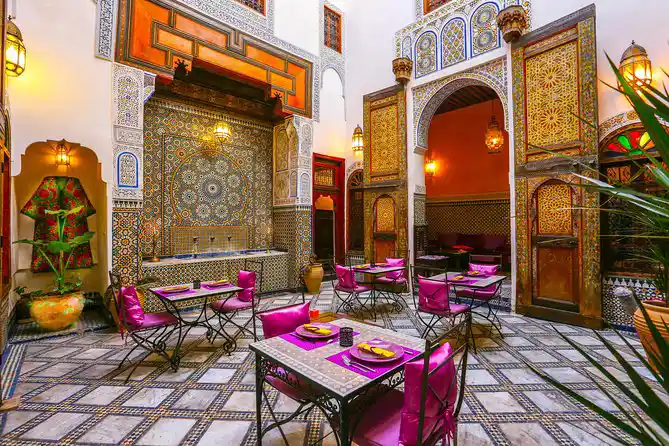
Riads are the authentic choice in the medinas — traditional courtyard houses converted into guesthouses, often with just four to eight rooms arranged around a central garden and fountain. A good riad is quiet, beautiful, and run by people who know their city intimately. They cost more than budget hotels but far less than international chains, and the experience is incomparable.
Gîtes d'étape in the Atlas Mountains are simple rural guesthouses used primarily by Moroccan hikers and trekkers. They offer a bed, a shared bathroom, and dinner cooked by the owner's family — usually a tagine that has been simmering since mid-morning. Prices are extremely low and the human connection is high.
Dar accommodations in smaller towns and villages offer a family home experience — you sleep in a spare room, eat breakfast with the family, and leave knowing something real about Moroccan domestic life.
Wild camping by campervan is the local option that most travelers never consider but that Moroccan families themselves practise regularly, particularly in summer. The Atlantic coast south of Essaouira, the Draa Valley, the Saharan pistes near Merzouga, and the Anti-Atlas plateau offer wild camping terrain of extraordinary quality. Park responsibly, leave no trace, and this freedom is yours entirely.
Cultural Rules Every Traveler Must Know
This travel Morocco guide would be incomplete without clear cultural guidance. Morocco is a Muslim-majority country with deep traditions of hospitality and religious observance, and a little cultural awareness goes a very long way.
Dress modestly outside of beach resorts and international tourist areas. Covered shoulders and knees show respect in medinas, rural villages, and religious sites, and make your experience significantly smoother in smaller towns where foreign visitors are rare.
During Ramadan — the dates of which shift earlier by approximately eleven days each year — eating, drinking, and smoking in public during daylight hours is deeply disrespectful and technically illegal. Many restaurants close during the day. The evenings, however, come alive in extraordinary ways, and experiencing iftar — the breaking of the fast at sunset — with a Moroccan family or at a community table in the medina is one of the most memorable things this country offers.
Mosques are generally closed to non-Muslim visitors in Morocco, with the exception of the Hassan II Mosque in Casablanca. Approach religious sites with silence and respect, remove shoes when entering any sacred space, and never photograph people at prayer.
Accepting hospitality — a glass of tea, an invitation to sit, an offer of food — is a cultural obligation in Morocco, not merely a courtesy. Refusing without good reason is considered rude. Say yes, sit down, slow down. The conversation that follows will almost certainly be the highlight of your day.
The Best Regions for Campervan Travel in Morocco
For travelers using a camping car in Morocco, certain regions stand out as particularly suited to this style of travel.
The Atlantic coast between Agadir and Tan-Tan offers hundreds of kilometres of wild coastline with natural pull-off spots, clean beaches, and almost no infrastructure. Local fishermen camp here seasonally and the landscape is raw and extraordinary.
The Draa Valley south of Ouarzazate follows a river of palm oases through a succession of kasbahs and Berber villages. Campervan travelers can park beside the road and walk into villages for fresh dates, homemade bread, and conversation.
The Anti-Atlas Mountains between Taroudant and Tafraout are among the least-visited landscapes in Morocco despite being among the most beautiful. Pink granite boulders, almond orchards, and Berber villages with no tourist infrastructure whatsoever make this a paradise for self-sufficient camping car travelers.
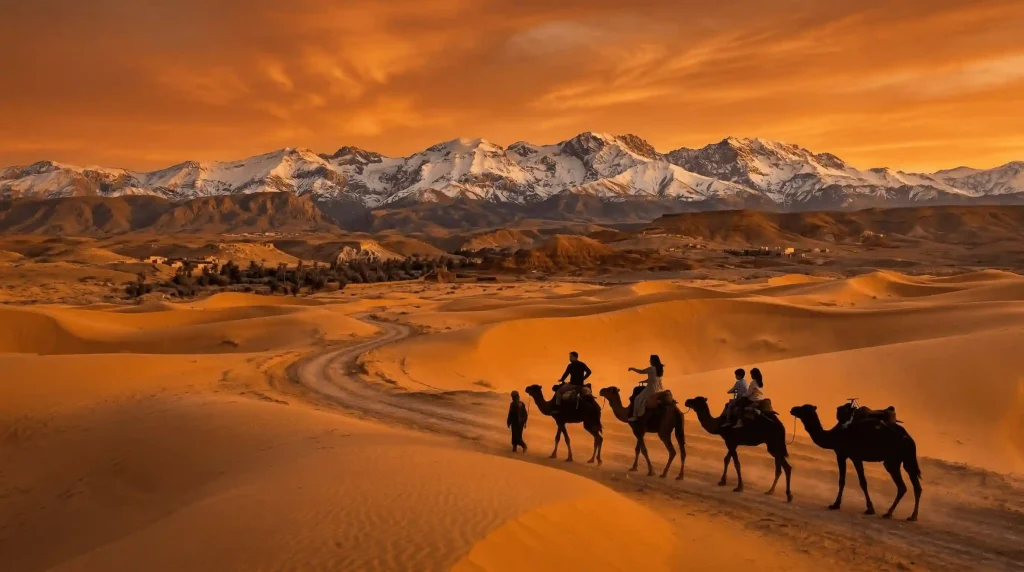
The Saharan south around Merzouga and M'Hamid needs no introduction. Park your campervan at the edge of the dunes and walk into the desert at your own pace. Several designated campsites at the dune edge offer basic facilities, or wild camping on the approaches to the erg is perfectly feasible and completely free.
FAQ: Travel Morocco Guide
What is the single most important piece of advice for traveling Morocco like a local? Slow down. Morocco rewards patience and penalises impatience. The travelers who try to see everything in ten days see nothing properly. The ones who spend three days in a single valley, eat at the same café twice, and learn the name of the guesthouse owner's children — those are the ones who understand what Morocco actually is.
Is Morocco suitable for campervan travel with children? Absolutely. Moroccan culture is extraordinarily child-friendly, and families traveling by camping car are warmly welcomed everywhere. Children receive particular affection from local people, and the freedom of a motorhome — stopping at beaches, visiting markets, cooking your own food — suits family travel extremely well.
How much does Morocco camping car location cost? Prices vary by vehicle size and season. A basic two-person converted van typically costs between 400 and 600 dirhams per day. A fully equipped family motorhome ranges from 800 to 1,400 dirhams per day. Most agencies require a refundable deposit and a minimum rental period of five to seven days.
What French phrases are most useful when traveling Morocco? Beyond the basics, the most useful phrases are: C'est combien? (how much?), Trop cher (too expensive), Un café, s'il vous plaît (a coffee please), and Où est le camping le plus proche? (where is the nearest campsite?). In rural areas and the south, Darija or Tamazight Berber are more commonly spoken than French.
Is wild camping legal in Morocco? There is no specific law prohibiting wild camping in Morocco, and it is widely practised by both Moroccan families and foreign travelers. The unwritten rule is to camp away from inhabited areas, leave the site in the same condition you found it, and move on after one or two nights in the same spot. Gendarmerie are occasionally curious about camping car travelers in remote areas but are rarely obstructive toward respectful tourists.
Conclusion
The Morocco that locals know is not hidden — it is simply slightly off the path that most tourists follow. It requires a willingness to slow down, eat in unphotographed places, take roads with no famous destination at the end, and measure the quality of a day not by how many sites you visited but by the quality of the conversations you had and the landscapes you sat quietly inside.
This travel Morocco guide is an invitation to that version of the country. Whether you follow it with a campervan stocked for two weeks of desert and coast, or on a slower journey through mountain villages and rural souks, the deeper Morocco is there — patient, generous, and waiting for the traveler who arrives with genuine curiosity.
The road is long and the mint tea is always hot. There is no better time to begin.